 potatoes.me
Meijer Potato's Nitrogen Trials Flag Varieties That Need Less Fertilizer
Multi-year field trials are turning nitrogen use efficiency into a selectable genetic trait rather than just a fertilizer management choice, with specific varieties already shown to hold or improve performance on reduced nitrogen.
The method
Drone-Eyed Trials in the Field
Nitrogen regulations are tightening across major potato-growing regions, and growing conditions are becoming more variable season to season, squeezing growers from both directions. A newsletter from Meijer Potato, dated July 2026, lays out a multi-year trial program built to answer how different varieties actually respond to that squeeze.
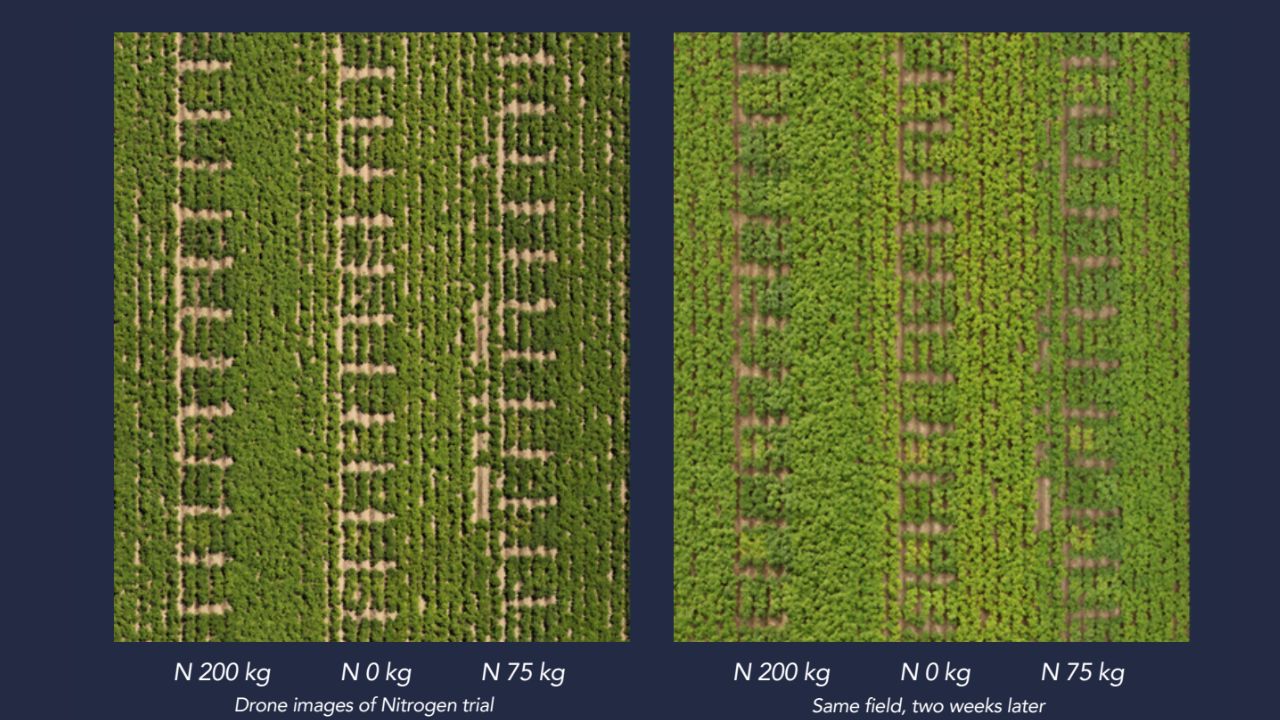
Every one to two weeks, a drone passes over the trial field, capturing visible-light (RGB) images alongside near-infrared (NIR) data invisible to the human eye. The published images show identical plots under three fertilizer regimes — 200 kg of nitrogen, 75 kg, and zero — photographed at two points in the season, and the canopy differences between them widen visibly as the weeks pass.
The mechanism
Selecting for Efficiency Before Planting Begins
Nitrogen use efficiency is described as a structural part of the breeding program rather than a side project. Genomic selection, based on DNA markers and predicted breeding values, is combined with phenotyping selection, based on observed traits, to flag candidate varieties with naturally higher nitrogen use efficiency before they reach broader commercial testing.
Potential new varieties are then pushed through nitrogen stress tests under three regimes — a normal application, a half dose, and none at all — designed to expose how each candidate behaves under excessive stress and to trace the underlying genetics responsible for efficient nitrogen use.
The standout varieties
Three Standout Performers
Nitrogen trials have run since 2021, producing multiple years of consistent data, the newsletter states. Two of the resulting findings run against the usual assumption that more fertilizer means more yield: Lady Luce and Lady Alicia are both reported to perform better when less nitrogen is applied, rather than merely tolerating the reduction. A third variety, Sound, is described as holding high yield and good quality even with zero nitrogen applied, a result attributed to its efficient root system.
Finer questions
Finer Agronomic Questions
Alongside the main trial, smaller and less intensive tests target narrower, variety-specific questions. Two examples given are whether reducing nitrogen input at the start of the season increases tuber set, and whether splitting nitrogen applications across the season shifts the harvest toward larger tuber sizes. These smaller trials apply only to a limited number of varieties and each requires its own protocol and management approach.
The pipeline
From Trial Plot to Growing Advice
Once a variety moves into registration, the research continues into a later stage focused on optimizing growing practices, testing nitrogen uptake efficiency to pin down the right quantity and timing of nitrogen supply for that specific variety. The same later-stage testing also covers uptake of phosphorus and potassium, feeding directly into the growing advice eventually given to growers, processors, and packers.
As nitrogen regulations tighten and growing conditions grow less predictable, varieties that hold yield and quality on less fertilizer give growers, processors, and packers a way to meet environmental limits without simply accepting lower output.
What is nitrogen use efficiency in potato breeding?
It refers to a variety's ability to maintain yield and quality while using less applied nitrogen fertilizer, a trait Meijer Potato selects for using genomic and phenotyping data before candidate varieties advance in its breeding program.
Which potato varieties perform well with reduced nitrogen, according to the trials?
The newsletter names Lady Luce and Lady Alicia as performing better under reduced nitrogen, and Sound as maintaining high yield and quality even with zero nitrogen applied, attributed to an efficient root system.
How does Meijer Potato monitor its nitrogen trials?
A drone flies over the trial field every one to two weeks, capturing visible-light and near-infrared imagery to track canopy growth and development across plots receiving different nitrogen application rates.