 potatoes.me
Managing Reducing Sugars in Potatoes Stored for Chip Processing
 With insight from Dr. Hesham Salah El Askary
Chip-grade color and flavor are decided in the storage room, not the fryer — a narrow 9-11°C window, tight CO2 control, and a slow reconditioning ramp before processing are what keep reducing sugars from ruining the finished product.
The stakes
The Color Problem Behind Every Chip
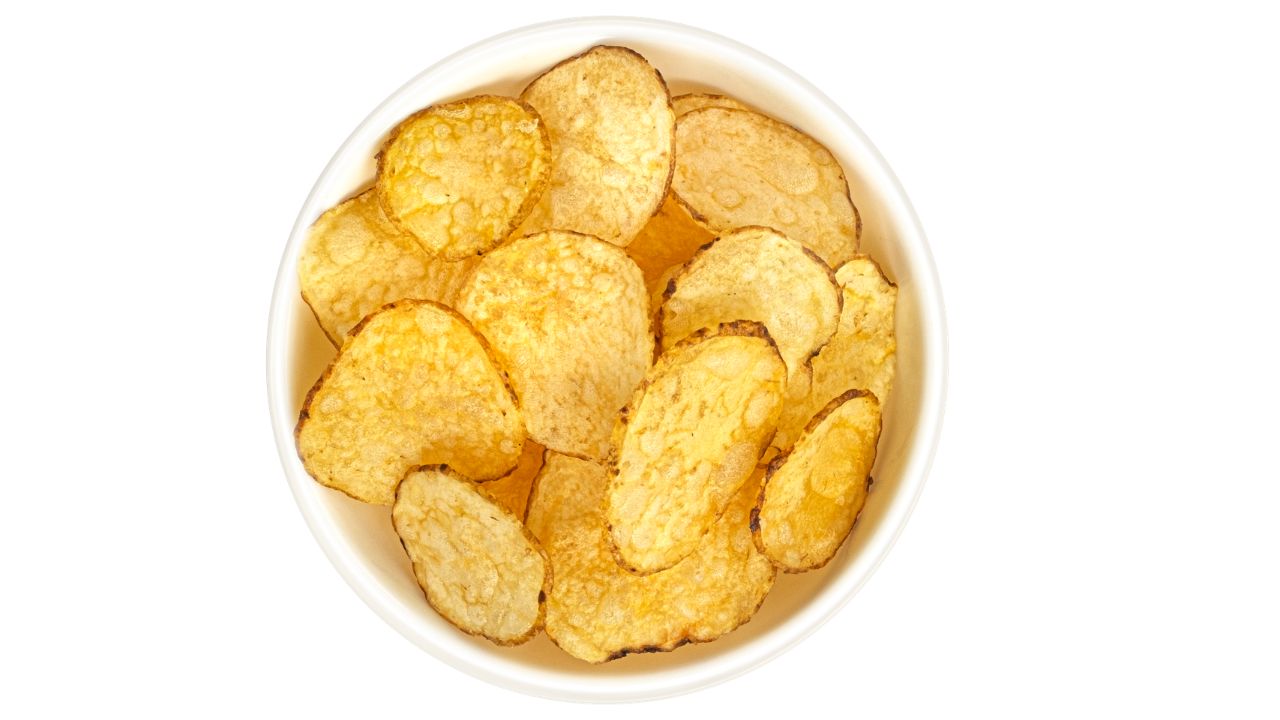
A bag of chips that fries dark, bitter, and high in acrylocide didn't fail in the fryer — it failed in the storage room months earlier. Reduced sugars (glucose and fructose) react with amino acids under high heat in the Maillard reaction, producing the browning, off-flavors, and acrylamide that processors spend enormous effort avoiding. Dr. Hesham Salah El Askary, in a first-person account of processing-potato storage practice, lays out why controlling these sugars is less about the frying step itself and more about what happens to the tuber for months beforehand.
The account frames the challenge as a biochemical one: sucrose in the tuber is stable, but once it breaks down into glucose and fructose, those reducing sugars are what caramelize and darken during frying. Everything in the storage protocol described exists to keep that breakdown from happening.
A mechanism
Four Ways Sugar Builds in the Tuber
El Askary identifies four biological and environmental triggers that push a stored tuber toward sugar accumulation, even in varieties bred for cold-sweetening resistance:
- Cold-induced sweetening: storage below 8°C activates the invertase enzyme, which breaks sucrose down into reducing sugars
- Immature harvest: tubers pulled before full ripeness already carry elevated sucrose and free reducing sugar levels, so they never establish chemical stability once storage begins
- Respiration and CO2 buildup: poor ventilation lets gas levels rise in the store, stressing the tubers and pushing them to convert starch into simple sugars for energy
- Dormancy break and sprouting: once dormancy ends, the tuber physiologically breaks down its starch reserve to feed new shoots, which effectively ends that batch's usefulness for processing
A data point
A Narrow Thermal Window
The protocol described holds processing-bound potatoes at 9 to 11°C — a range chosen deliberately, according to the account, because it's low enough to slow respiration and delay sprouting but still high enough to keep the invertase enzyme from becoming active. That's a notably warmer target than table-potato storage often uses, precisely because the enzyme risk outweighs the sprouting risk for this end use.
Alongside temperature, the account specifies continuous ventilation to keep carbon dioxide in the storage atmosphere between 0.2% and 0.25%, expelling saturated air and replacing it with fresh air so the tubers don't experience the stress response that drives starch-to-sugar conversion.
A regulatory shift
Replacing a Banned Chemical
Dormancy management is where regulation has forced a change in practice. CIPC gas, long used to suppress sprouting, has been banned in the European Union, and El Askary's account describes the alternatives now used to keep tubers dormant for export-acceptable storage: mint oil (marketed as Biox-M), ethylene gas, and orange oil (1,4-DMN), each applied at doses recommended in the destination country.
Harvest timing gets equal weight in the account. Fully ripe harvesting after the skins have hardened is described as essential to starting with a low free-sugar baseline, followed by an initial drying period of 10 to 14 days at 15-18°C and 95% relative humidity to heal wounds and scratches from pulling before the potatoes ever go into refrigeration.
The final step
From Cold Storage to the Fryer
The final stage in the account is reconditioning. Potatoes held long-term at 4-5°C to fully suppress dormancy can't go straight to the fryer — El Askary describes raising the temperature gradually, by 0.5 to 1°C per day, up to 15-18°C over two to three weeks before use. That slow warm-up stimulates cellular respiration, prompting the tuber to consume its accumulated reducing sugars and convert what's left back into starch, bringing reducing sugar content down to what the account describes as a safe processing limit of roughly 1% to 1.5% of wet weight.
Processors and growers supplying chip and fry manufacturers depend on precise storage protocols to avoid rejected lots, off-color product, and acrylamide risk — details like CIPC's EU ban and its oil-based replacements directly affect what's usable for export markets.
Why does cold storage cause potatoes to turn dark when fried?
Storage below 8°C activates the invertase enzyme, breaking sucrose down into reducing sugars (glucose and fructose) that darken and turn bitter through the Maillard reaction during frying.
What replaced CIPC for suppressing potato sprouting after its EU ban?
The account describes mint oil (Biox-M), ethylene gas, and orange oil (1,4-DMN) as export-acceptable alternatives for maintaining dormancy.
What is reconditioning in potato storage?
It's the gradual warming (0.5-1°C per day) of cold-stored potatoes up to 15-18°C over two to three weeks before processing, which lets the tuber consume built-up reducing sugars and convert them back into starch.

Dr. Hesham Salah El askary is a consultant on potato diseases and potato cultivation across Egypt's new lands and the Delta, and works as a Technical Manager. He is based in Al Jizah, Egypt. His work spans potato cultivation in both new and old lands, with particular expertise in potato varieties and in the treatment and evaluation of those varieties under local conditions and climate. Over 29 years, he has worked across marketing and production in fertilizers, pesticides, seeds and agricultural transactions, applying current agronomic technologies to Egyptian growing conditions. His focus also extends to potato planting and export. He studied at Minufiya University.
potatoes.me features industry leaders by invitation. If this is your story and you’d like your own page, we’d love to hear from you — hello@potatoes.me.
Russian Growers Shift From 'Whether' to 'How' on AI Sorting
What One Engineer's Career Reveals About French Fry Megaprojects
AI Sorting Technology Targets Potato Post-Harvest Losses in Russia
Source
- First-person account by Dr. Hesham Salah El Askary