 potatoes.me
Jolin Potato Variety Hits 30 Tons/ha Despite Cold Ukraine Spring
A single-farm control dig in Ukraine projects the mid-late Jolin variety at close to 30 tons/ha despite a cold spring that suppressed tuber set across the crop, while a companion trial shows a boron-damaged Early variety plant recovering after amino acid fertilization — both framed against a warning to keep up alternaria treatments as a second tuber-formation wave approaches.
The number
The Number Behind the Projection
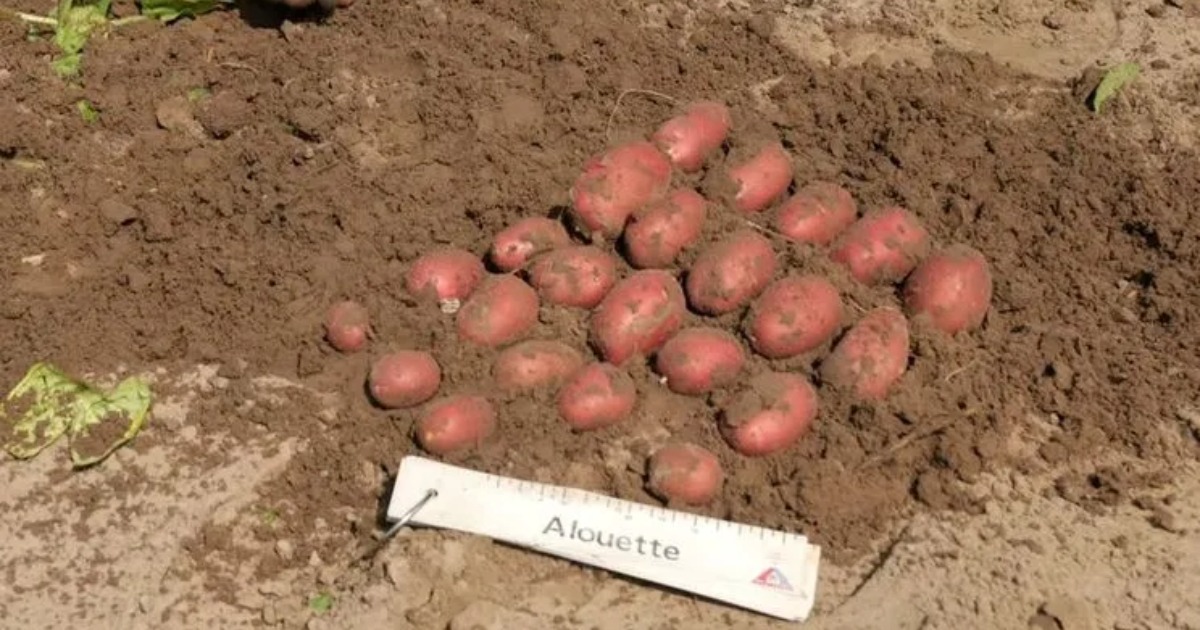
A control digging on July 4 at the Agriko Ukraine LLC farm found 685 g of tubers under a single dug bush of the mid-late variety Jolin, planted May 1. At a planting density of 48,000 plants per hectare, that per-bush weight scales to a projected yield of nearly 30 tons/ha — and the farm expects the figure to climb further over the next one and a half to two months as bulking continues. This was reported in a story on the YouTube channel "Agriko Ukraine," as covered by agronews.ua. It's worth being precise about what this number is: a mid-season extrapolation from one control dig, not a final harvest weight. Tuber bulking in potatoes is not linear, and a lot can still happen agronomically and climatically before Jolin comes out of the ground for good.
The context
Reading the Result Against a Difficult Spring
What makes the figure notable isn't the raw tonnage — it's the season it was produced in. Viktor Riznik, chief agronomist at Agriko Ukraine LLC, said this year is marked by a much smaller tuber set than usual because of an extremely cold spring, followed by heat stress later in the cycle. Against that backdrop, he noted that Jolin's formation dynamics and development intensity are now catching up even to ultra-early varieties — a variety bred and marketed as mid-late is behaving, this season, almost like an early type. That's a meaningful signal for growers weighing variety choice against increasingly erratic spring weather, though it remains a single-farm, single-season observation rather than a multi-site trial result.
Reportedly, Viktor Riznik, Agriko Ukraine LLC said that this year is characterized by a much smaller tuber set due to the extremely cold spring. However, the Jolin variety in terms of formation dynamics and development intensity is now catching up with even the ultra-early varieties.
The recovery
The Boron Recovery Story
The same control assessment covered a second variety, Early, which had earlier suffered phytotoxicity from a combination of high boron concentration and heat stress. After amino acid fertilization was applied, the plants recovered growth and went on to form 18 commercial tubers per bush, totaling 1.55 kg. The recovery matters beyond this one field: it's a documented case of a nutrient-stress injury being corrected mid-season rather than simply written off as lost yield, and it puts a specific input — amino acid fertilization — against a specific, named cause of damage.
The warning
The Second Wave and Disease Pressure Ahead
Agronomists on the farm flagged a further risk sitting downstream of the good yield news: the potential for a second wave of tuber formation, and the need to keep up preventive treatments against alternaria rather than easing off because early numbers look strong. Alternaria pressure tends to build later in the season as canopy stress accumulates, so the warning functions as a caution against reading a promising July control dig as a settled outcome.
The result is an early-season snapshot, not a harvest figure, but it offers growers facing increasingly unpredictable spring weather a concrete data point on how a mid-late variety can compensate for a poor tuber set, alongside a practical nutrient-recovery case and a reminder that strong early numbers don't remove the need for continued disease prevention.
What yield did the Jolin potato variety show in the control digging?
A control dig on July 4 found 685 g of tubers under one bush, which at a planting density of 48,000 plants per hectare corresponds to a projected yield of nearly 30 tons/ha, with further growth expected over the following one and a half to two months.
Why is this yield figure notable given the season?
Viktor Riznik of Agriko Ukraine LLC noted the year had a much smaller tuber set than usual because of an extremely cold spring, making Jolin's development pace — catching up to even ultra-early varieties — a stronger comparative result than the raw number alone suggests.
What happened with the Early variety on the same farm?
The Early variety had suffered phytotoxicity from high boron concentration combined with heat, but after amino acid fertilization the plants recovered growth and formed 18 commercial tubers per bush weighing 1.55 kg total.
What risk are agronomists warning about going forward?
Agronomists flagged the risk of a second wave of tuber formation and urged growers not to skip preventive treatments against alternaria as the season progresses.
Viktor Riznik, Agriko Ukraine LLC
potatoes.me features industry leaders by invitation. If you’re named here and would like to share your perspective, we’d like to hear from you — hello@potatoes.me.
ITC's Technico Scales Aeroponic Seed Potato Output to 100 Million Mini-Tubers
Bryansk Region's Potato Harvest Reaches 27% of Plan at Strong Yields
The Living Soil Beneath the Potato Crop
Source
- Potato variety Jolin showed a yield of 30 tons/ha — agronews.ua